Every Hercule Poirot Movie Ranked: From Peter Ustinov To Kenneth Branagh

Last Updated on April 22, 2026
Agatha Christie created Hercule Poirot in 1920 with The Mysterious Affair at Styles, introducing a retired Belgian police officer with sharp eyes, a sharp mind, and a serious commitment to tidiness and order.
From the start, she gave him those little grey cells, a meticulous love of routine, and a slightly comic vanity that made him feel more human than many of his fictional detective rivals.
Christie sometimes joked that she grew tired of him, but readers never did, and it was not long before film producers came calling to bring this fastidious Belgian to the big screen.
As fans, we now have almost a century of Hercule Poirot movies to enjoy, from early black-and-white mysteries to glossy modern thrillers set on trains, boats, and in haunted Venetian palazzi.
In this article, I’m sticking to the movies (including TV movies), and I’m leaving out the long‑running David Suchet TV series, brilliant as it is.
Early Screen Poirot

Poirot first appeared on film in the early 1930s, when British cinema was still feeling its way into sound and mystery storytelling.
Alibi (1931) and Black Coffee (1931) both brought him to the screen, followed by the French film Le Coffret de Laque (1932) and Lord Edgware Dies (1934).
These early versions are very much of their time, with stage‑like acting and simple camerawork, but they helped establish Poirot as a character who could hold a film on his own.
After that flurry, Poirot took a long break from the cinema, disappearing from screens for three decades before making a very different kind of comeback in the swinging sixties.
That return came in The Alphabet Murders (1965), a loose and comic take on The A.B.C. Murders with Tony Randall as a far more slapstick detective than the one we meet on Christie’s pages.
It is a curiosity more than a classic, but it shows how flexible the character had already become by the mid‑20th century.
Albert Finney and Peter Ustinov’s Poirot

The real golden age of early Poirot films began with Murder on the Orient Express (1974), starring Albert Finney as the detective.
This lavish production turned Christie’s story into a full old‑school star vehicle, with a cast including Ingrid Bergman, Sean Connery, and Lauren Bacall, and it set the template for later ensemble adaptations.
Finney’s Poirot is brisk and explosive, very different from the quieter interpretations that came later, but the film’s success proved that a Christie mystery could still pack cinemas in the 1970s.
Peter Ustinov took over the role a few years later and gave us a very different, and for many of us, very cozy Poirot.
He first appeared as the detective in Death on the Nile (1978), a sun‑drenched Egyptian river mystery that paired his rumpled charm with another all‑star cast.
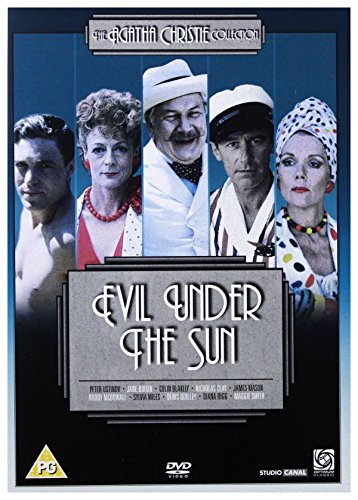
Ustinov followed this with Evil Under the Sun (1982), trading the Nile for a glamorous Adriatic resort, again mixing witty dialogue with beautiful locations and a slightly more relaxed, almost avuncular Poirot.
Ustinov then moved mostly to television, but he kept owning the role. He returned in three mid‑80s TV movies: Thirteen at Dinner (1985), Murder in Three Acts (1986), and Dead Man’s Folly (1986), and then again in Appointment with Death (1988), which brought him back to the big screen.
Across these six films, his Poirot feels warmer and more approachable than many later versions, less spiky and more amused by human behavior, which makes them perfect comfort watches on a quiet evening.
Kenneth Branagh’s Big‑screen Revival

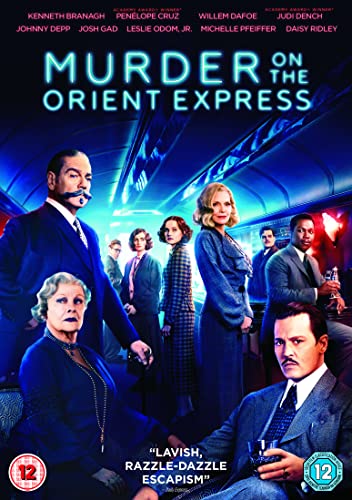
In 2017, Poirot returned to large‑scale cinema with Kenneth Branagh, both directing and starring in Murder on the Orient Express.
This version updates the look and feel while keeping the original period setting, packing in a modern ensemble including Michelle Pfeiffer, Judi Dench, and Willem Dafoe, and giving Poirot a now‑famous, highly stylized mustache.
Branagh’s Poirot is more openly emotional and physically active than most earlier portrayals, which divides opinion, but it has opened the character up to a new generation of moviegoers.
He followed that film with Death on the Nile (2022), again combining glossy production design with a classic locked‑room setup on a luxury cruise along the Nile.
In 2023, the third film, A Haunting in Venice, took a looser approach to its source, Hallowe’en Party, turning it into a more gothic, supernatural‑flavored mystery in a decaying Venetian palazzo.
Across these three films, Branagh and screenwriter Michael Green have created a coherent film series, with Poirot aging, changing, and carrying emotional scars from earlier cases, which is a new angle for the character on screen.
Are More Poirot Movies Coming?
At the moment, there is strong industry chatter that Branagh’s Poirot is not finished yet. After A Haunting in Venice, producer James Prichard, who represents Agatha Christie’s estate, has hinted that the door is open for more films, helped by healthy global box office returns for the three existing entries.
Reports suggest that future adaptations may turn to some of the less frequently filmed novels, with The Murder of Roger Ackroyd often mentioned by commentators as a likely candidate, though nothing has been officially announced.
What seems clear is that the combination of Christie’s plots, Branagh’s star power, and modern production budgets still has room to run if the right stories and scripts come together.
Hercule Poirot Movies Ranked From Best To Worst
Like all ‘best’ lists, this is completely subjective, and I’ll tell you up front that I’m not a fan of Brannagh’s Poirot movies.
It’s not that I don’t like him or his interpretation, but Death on the Nile is cinematically awful and looks like 90% of it was filmed with a CGI screen.
A Haunting in Venice was nothing but a who’s who of Hollywood, and bears absolutely no relation to the original book, in any way whatsoever.
It’s almost impossible to improve on Agatha Christie, and these versions are a prime example of ‘if it’s not broke don’t fix it!’
That said, some Poirot movie adaptations are chef’s kiss, so here we go….
1. Murder on the Orient Express (1974) – Albert Finney
Sidney Lumet’s 1974 film is still the benchmark for classic Christie on screen, with Albert Finney’s bristling Poirot surrounded by an all‑star cast including Ingrid Bergman, Lauren Bacall, and Sean Connery.
It nails the locked‑room atmosphere, keeps the puzzle tight, and marries old‑Hollywood glamour with a surprisingly bleak solution.
2. Death on the Nile (1978) – Peter Ustinov
Ustinov’s first outing is lush, witty, and properly cruel when the mystery turns dark, and many fans see it as the definitive screen version of this story.
The Egyptian locations, a stacked cast (Mia Farrow, Bette Davis, Angela Lansbury), and Ustinov’s relaxed but razor‑sharp Poirot make it endlessly rewatchable.
3. Evil Under the Sun (1982) – Peter Ustinov
This sunny island mystery doubles down on character comedy without losing the bite of the central murder.
Ustinov looks completely at home as Poirot here, trading barbs with Maggie Smith, Diana Rigg, and James Mason against a gloriously escapist resort backdrop.
4. Thirteen at Dinner (1985) – Peter Ustinov (TV movie)

This American TV movie, based on Lord Edgware Dies, pairs Ustinov with Faye Dunaway and David Suchet (ironically not as Poirot) and updates the story to the 1980s.
It is lighter and less polished than the theatrical films but remains fun for Ustinov’s performance and the curiosity factor.
5. Murder on the Orient Express (2017) – Kenneth Branagh
Branagh’s first Poirot film is a glossy, starry re‑mount of the 1974 classic, with lavish production design and that famously extravagant mustache.
It does not radically reinvent the story, but it successfully introduces the character to a new audience and launched a modern film series.
6. Dead Man’s Folly (1986) – Peter Ustinov (TV movie)
Set around a “murder hunt” game at an English country house, this TV adaptation has a nice country‑house feel but a more modest look and pace.
It is enjoyable for completists and Ustinov fans, though clearly made on a tighter budget and without the big ensembles of his earlier films.
7. Murder in Three Acts (1986) – Peter Ustinov (TV movie)
Transplanting Three Act Tragedy to an updated setting with Tony Curtis in a key role, this TV movie plays more like a mid‑80s US mystery‑of‑the‑week.
The mystery is solid, but the tone is lighter and occasionally hokier, which pushes it lower down a best‑to‑worst list.
8. The ABC Murders (2018) – John Malkovich (miniseries)

I know it’s not technically ‘a movie’ but this three‑part BBC/Prime Video drama reimagines The ABC Murders with John Malkovich as an older, more world‑weary Poirot, disgraced and sidelined in a more openly hostile 1930s Britain.
It takes major liberties with the book and adds a darker backstory, which split viewers, but I liked Malkovich’s thoughtful, wounded performance and the moody, noir‑ish atmosphere.
If you go in expecting a faithful Christie, you may be frustrated; if you treat it as a bold “what if” character study, it’s an intriguing watch that earns a solid mid‑table spot.
9. Death on the Nile (2022) – Kenneth Branagh
The second Branagh film keeps the period Nile cruise setting but adds more backstory for Poirot, including an origin for his mustache, which is frankly unnecessary.
It still offers some strong set‑pieces and emotional beats, yet it is often seen as the weakest of the trilogy due to pacing and structure. I still think it’s marginally better than the third film, which is why I have it higher up the list.
10. Appointment with Death (1988) – Peter Ustinov
Ustinov’s final big‑screen Poirot shifts things to Middle Eastern ruins but is widely seen as the weakest of his run.
The plot is heavily altered from the novel, and the pacing is uneven, with critics often noting that it lacks the snap and charm of Death on the Nile and Evil Under the Sun.
11. A Haunting in Venice (2023) – Kenneth Branagh
The third Branagh film leans into gothic and supernatural notes while loosely adapting the book it is based on. Feel free to laugh at the term ‘loosely’ given that it has zero in common with the original Agatha Christie novel.
This is a smaller, more claustrophobic setting and a more haunted, introspective Poirot, which gives this one a fresh identity in the filmography.
12. Lord Edgware Dies (1934)
As it was nearly 100 years ago, we can forgive a lot, and while this early British Poirot movie is historically important, it is creaky by modern standards.
Performances and production values reflect the era, and while it is interesting for completists, it tends to sit near the bottom of ranked lists.